Monday, September 13, 2021

Mad in Pursuit


"We find that whole communities suddenly fix their minds upon one object, and go mad in its pursuit; that millions of people become simultaneously impressed with one delusion, and run after it, till their attention is caught by some new folly more captivating than the first."—Charles Mackay, in Extraordinary Popular Delusions and the Madness of Crowds (1841)
 
I find it remarkable that we in the Church, year after year, run lickety-split after every new-born fad the world conceives—mad in pursuit. We readily embrace each system; but seldom do we "test the spirits" to see if these ideologies fully embrace and reflect the mind of God (1 John 4:1).
 
For that reason, I often caution young pastors against running after new theologies. There’s something about youth that loves new and unusual, experimental, progressive ideas, but the gospel is not avant-garde. We go back to “that which was from the beginning,” to the old orthodoxies, to the clear teaching of Jesus and his apostles (1 John 1:1). 
 
Inevitably, progressive concepts fade away as the world finds them wanting and moves on to "another folly more captivating than the first." Yet the Church clings to these ideas tenaciously, long after they have been found wanting and have been jettisoned by the world. Indeed, as Jesus said, the sons of this world are more shrewd than the sons of light (Luke 16:8). 
 
Peter, instead, writes of “the living and enduring word of God… This word is the good news (the gospel) that was preached to you" (1 Peter 1:23-25).This is the gospel that was “once for all delivered to the saints” (Jude 3). 
 
In contrast, "the world and its passions are passing away" (1 John 2:17); its systems soon become passé. What will become of us, then, if we have staked our lives and ministries upon them?
 
Pity the gods,
no longer divine.
Pity the night
the stars lose their shine. —Dana Gioia
 
David Roper
11.13.21

Sunday, September 12, 2021

Tears

 
You have kept count of my tossings;
You put my tears in your bottle.
Are they not in your book? (Psalm 56:8). 
 
God sees our tears, even those that fall inside. He keeps them and remembers them forever. 
 
How did David know that God is so inclined? The way you and I know. By looking at his face as it’s mirrored in his Word:  
 
I trust in God (Elohim), thanks to his Word; 
I trust in the LORD (Yahweh), thanks to his Word (56:11). 
 
How do I know God cares? By "his Word."
 
It’s striking that the Septuagint, the Greek version of the Old Testament, with remarkable prescience, anticipated the New Testament revelation and translated the second “Word” as “Logos,” the Apostle John’s word for Jesus. Thus we see what God is like in both his written and incarnate Word![1]
 
How do I know God cares? By the tears in my Savior’s eyes (John 11:35).
 
George MacDonald wrote,
 
“If ever we get hungry to see God, we must look at his picture.”
“Where is that, sir?”
“Ah, Davie, don’t you know that besides being himself, and just because he is himself, Jesus is the living picture of God?”
 
David Roper
9.12.21

[1] “ἐπὶ τῷ θεῷ αἰνέσω ῥῆμα ἐπὶ τῷ κυρίῳ αἰνέσω λόγον” (Psalms 57 [56]:11).
 
E-musings are archived at http://davidroper.blogspot.com. You are receiving this e-mail because you requested it or someone requested it for you. You may unsubscribe here Unsubscribe, or by contacting me at dcroper@mac.com.


Saturday, September 4, 2021

Ba, Ba, Black Sheep


“It is for your sake we are killed all day long" (44:22).
 
Psalm 44 is often referred to as the "black sheep of the Psalter,” the only lament psalm with no resolution… Or so it seems at first reading.
 
The poet begins by recounting Israel's past victories and the means by which her ancestors drove the Canaanites out of the land—"not by their sword" but by the strength of God's almighty arm (44:1-4).
 
So...Israel went out to battle again, counting on God to fight for them: "Not in my bow do I trust, nor can my sword save me..." And suffered historic, humiliating defeat (44:5-28). It was a slaughter (44;11). Israel bit the dust; their bellies were dragging the ground (44:25). It was Georgia Tech vs. Cumberland College, 222-0.all over again. All this came about although Israel had not forgotten God, nor had she been false to His covenant (44:17).
 
But the poet has a flash of insight at his point of greatest perplexity: "It is for your sake we are killed all day long" (44:22).
 
The battle is more than local. We're part of the cosmic struggle of "the kings of the earth … against the Lord and his Anointed" (Psalm 2:2). We’re collateral damage in a bloody war between God and his enemies, a conflict 16th century Christian writer Jakob Boheme gathered up in a prayer: “May the Overcomer, Jesus Christ, through Himself, overcome in us all his enemies.”
 
Paul cites this psalm and spells out the forces arrayed against us and our Lord: tribulation, distress, persecution, famine, nakedness, danger, and sword. Nevertheless, he insists, "In all these things we are more than conquerors through Him who loves us"  (Romans 8;37).
 
We’ll be overrun now and then; we’ll suffer days of mortifying defeat. But we’re fighting a battle that has already been won.
And in the interim we have this assurance: "Neither death nor life, nor angels nor rulers, nor things present nor things to come, nor powers, nor height nor depth, nor anything else in all creation, will be able to separate us from the love of God in Christ Jesus our Lord!" (Romans 8:38,39).
 
Life is unmitigated struggle. Some days we’ll win; some days we’ll lose; some days we’ll lose BIG. But no matter. We will win in the end because we have chosen the right side. And in the interim, we are loved with everlasting love!
 
The psalmist saw this: “Redeem us for the sake of your steadfast love!" (44:26).
 
David Roper
9.3.21

Unstrung


“Be still, and know that I am God” (Psalm 46:10)
 
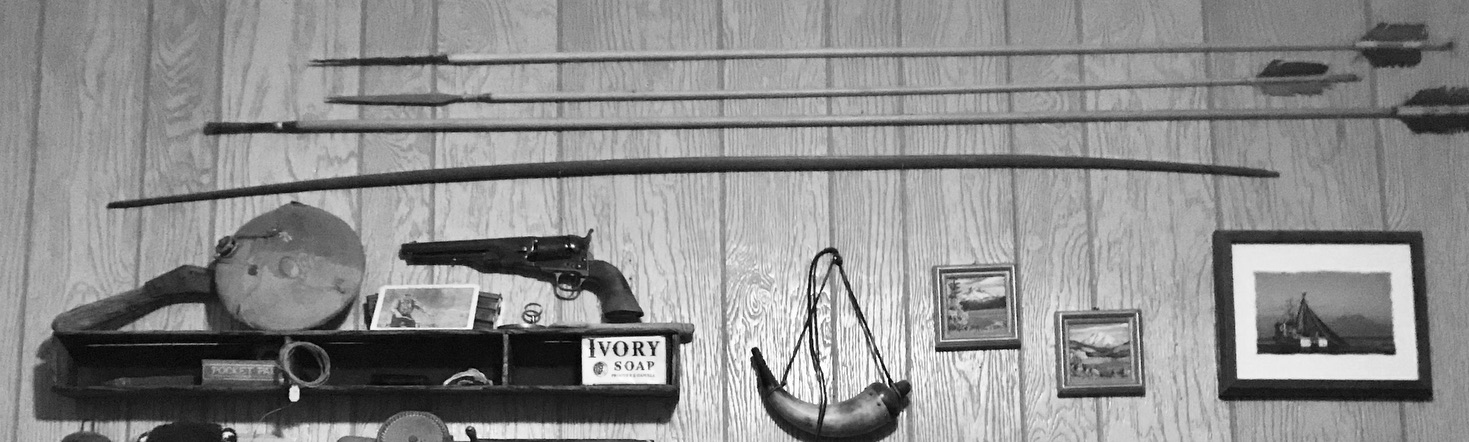
I have a bow on my study wall, a piece of exquisite workmanship, made by a native craftsman in the jungles of Suriname. I have a bow string for it, but the bow is unstrung—as a reminder. 
 
David wrote, “Be still,” employing a verb used in his day to refer to an unstrung bow—relaxed, unstressed, free from tension and strain. At rest. An extraordinary state of mind these days. 
 
The psalm supplies the basis of that state: “Know (keep in mind) that I am God.” 
 
And what sort of God is he? “Godless nations rant and rave, kings and kingdoms are in commotion. He speaks a word and they cease to exist.”  Indeed God, this God—“is our refuge” (46:6,7).  
 
“Selah!” (Think about  that!)
 
David Roper
9.4.21

Saturday, August 28, 2021

Greenleaf

 “May Your kingdom come, may Your will be done, on earth as it is in Heaven” (Matthew 6:10).

In a short story entitled “Greenleaf” Flannery O’Connor writes of a prim and proper, southern lady, Mrs. Mays, her ignorant handyman, Mr. Greenleaf, and his “oddball” wife, Mrs. Greenleaf.
 
Mrs. Greenleaf, described as a “large and loose” person, was the kind of woman Mrs. Mays despised. Especially infuriating was Mrs. Greenleaf’s preoccupation with “prayer healing”: “Every day she cut all the morbid stories out of the newspaper—the accounts of women who have been raped and criminals who had escaped and children who had been burned, and of train wrecks and plane crashes and the divorces of movie stars.”
 
Then she would take these fragments into the woods behind the house, fall on the ground at the foot of a tree and weep over them. “Jesus, Jesus, Jesus,” she would cry. Then she would dig a hole in the ground and bury every scrap of misery under the tree.
 
I think of the weary tales I read each day of wrongdoing and wretchedness: The tragic confusion in Afghanistan and on the Southern Border; the rising death toll from the Delta variant; the widespread brutality and violence in the city; the factional and fractured churches; the stories of broken promises and broken homes; the pictures of sad–faced little children and other victims of hunger, cruelty and neglect. The reports overwhelm ne. What can I do in my little sphere of influence to bring salvation to the world? 
 
The best I can do for the whole world is the best I can do for my own small part of it. I cannot save the world—that’s a job for God—but I can have compassion on my neighbor and alleviate his suffering insofar as I can.
 
As for the rest of the world, I can see and hear the misery that lies at the heart of it, and I can bury it at the foot of the “tree,” where the worst of life’s sorrow and suffering fell upon Jesus.
 
And I can leave it there—for His healing.
 
David Roper
8.28.21

Thursday, August 19, 2021

When the Lights Go Out

 “I therefore, a prisoner for the Lord, urge you to walk in a manner worthy of the calling to which you have been called, with all humility and meekness, with patience, bearing with one another in love, making every effort to maintain the unity of the Spirit in the bond of peace" (Ephesians 4:1-3).

If I were the devil and wanted to subvert God’s plan to save the world to what end would I direct my efforts? I would subvert the agents, of course, thorough whom God plans to save it.
 
That’s why we have such a hard time in the most unexpected place—within the church herself. And that’s why we must make “every effort” (a very strong Greek verb) to keep that peace by which the church is bound together—an effort that calls for great humility, meekness, patience, endurance and love. There’s no other way, for it is a failure of these virtues that causes a church to fall. 
 
Satan’s finest scheme is to get a church to go bad from within so God himself must judge her and remove her “lamp stand” (Revelation 2:3). The buildings may stand, the people may gather, the praise band may play, the preacher may preach, but the light will have gone out of that church and she will be of no use in this world.
 
(I was reminded, however, as I wrote that sentence, of a bank officer I knew, who, upon approving the building plans of one church, said, “Well, if the church goes under we can always turn the building into a dog clinic.”)
 
God forbid that we should be ignorant of Satan’s devices!
 
David Roper
8.19.21

Sunday, August 15, 2021

Acedia


“The arrow that flies by day…” (Psalm 91:5)
 
One of the so-called Seven Deadly Sins is acedia (a-said-ia), said to be a state of apathy, boredom and dissatisfaction with one’s lot. Early Christian monks referred to acedia as “the arrow that flies by day” because the temptation often struck in the afternoon, when fatigue—we would blame it on our bio-rhythm—made them susceptible to restlessness. It drove them out of their rooms to wander aimlessly, to seek other companions or conditions, rather than enjoy God in the “sweetness of their cells.”
 
One fourth century Christian, Evagrius, wrote that when acedia “has taken possession of some unhappy soul, it produces dislike of the place, disgust with the cell, and disdain and contempt of the brethren who dwell with him or at a little distance, as if they were careless or unspiritual… He often groans because he can do no good while he stays there, and complains and sighs because he can bear no spiritual fruit so long as he is joined to that society; and he complains that he is cut off from spiritual gain, and is of no use in this place, as if he were one who, though he could govern others and be useful to a great number of people, yet was edifying none, nor profiting anyone by his teaching and doctrine. He cries up distant monasteries and those which are a long way off, and describes such places as more profitable and better suited for salvation; and besides this he paints the intercourse with the brethren there as sweet and full of spiritual life.”[1]
 
Can it be that my restlessness in this wearisome pandemic is nothing more than acedia in another guise?
 
The word, “acedia” is not found in scripture. It’s a theological construct. Some, therefore, may doubt that it falls into the category of sin, or temptation to sin. But, it occurs to me, my present restlessness  and dissatisfaction may be nothing less than the sin of covetousness: a craving for something other than God has given me. [2]
 
Boredom and restlessness are endemic in me; I’m a rolling stone. But I must see my impatience for what it is and do what is required of me this day simply because God has asked me to do it. I must do it in the situation in which he has placed me, not yielding to my restless passion for that elusive “something more.” thinking that I am "cut off from spiritual gain, and of no use in this place.” I must tend “my lamp quietly for God without wondering how much longer it has got to go on.”[3]
 
It may be that someday God will remove these strictures and enlarge my sphere of influence. In the meantime I must be calm, patient, willing to do anything, willing to do nothing, to sit and wait, to enjoy God in the “sweetness of my cell.” Here in this place I must stay. Here I must be content until he guides me to some other place—on earth, or in heaven. 

“In this the long unrest is soothed and stilled; Our hearts are filled!”
 
David Roper
8.14.21

[1] The Institutions
[2] Cf., 1 Corinthians10:1-14 and Numbers 11:4-9
[3] From The Fruits of the Spirit by Evelyn Underhill 

Going and Not Knowing

"By faith Abraham obeyed when he was called to go out to a place that he was to receive as an inheritance. And he went out, not knowing...