Thursday, November 4, 2021

A Righteous Tree

Ancient Canaanite literature referred to evergreen trees as "righteous trees." (There's a reflection of that nomenclature in Isaiah 61:3 where the Servant of the Lord refers to the believing remnant of Judah as trees of righteousness, the planting of the LORD,") 

Evergreens don't drop their leaves and lose their shape in the winter, and they keep their verdure and foliage all year long. Thus in ancient times they were considered "righteous" because they always looked like trees—trees as trees are supposed to be.   

Righteousness these days is associated with fusty, finger-wagging prudes who are “good” in the worst sort of way, but ancient etymology belies that meaning: Personal righteous is "being what a man or women is supposed to be."

We all have vestigial memories of what we’re supposed to be. It’s that idea—it exists in the worst of us—that makes us want to be better.

C.S. Lewis (I think it was) once said that you can slap an alligator on the back and say "Be an alligator" and he will be unmoved by your entreaty. But clap a man on the back and say "Be a man"and he will know exactly what mean. (This was written before the age of gender sensitivity.) 

This is the righteousness that Jesus has promised to all who seek it and ask it of hm: “Blessed are those who hunger and thirst for righteousness, for they shall be satisfied" (Matthew 5:6). 

David Roper
11.4.21

Hope Floats

"Love bears all things, believes all things, hopes all things, endures all things" (1Corinthians 13:7).

No human being is hopeless. Only demons are hopeless, for their character is fixed for all eternity. Everyone else deserves the benefit of doubt.

Love is a refusal to give up on others; to take failure as final. It sees promise and looks for progress, no matter how slight. It prays and hopes and waits for ultimate triumph through the grace of God. 

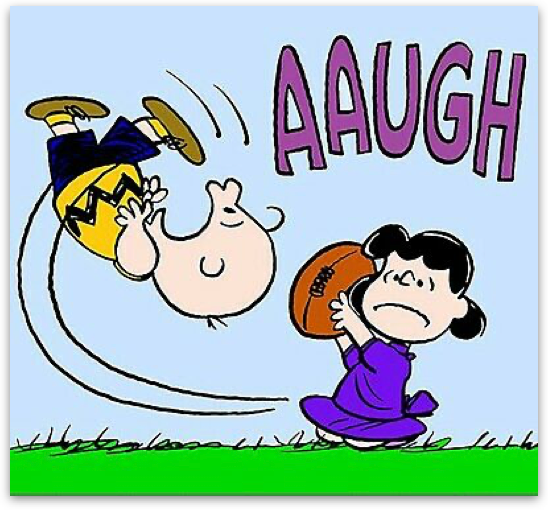
A friend of mine once mused that he'd rather have it said that he loved too many than that he loved too few. Indeed, we may love too many, be fooled by pretense and our hearts may be broken, but, it's better to be less like Lucy, and more like Charlie Brown.


David Roper
11.3.21

Thursday, October 21, 2021

Lessons from the Lord of the Flies

 One day Ahaziah fell through the balcony railing on the rooftop of his house in Samaria and was injured. He sent messengers off to consult Baal-Zebub, (the Lord of the Flies) the god of Ekron, "Am I going to recover from this accident?" GOD's angel spoke to Elijah the Tishbite: "Up on your feet! Go out and meet the messengers of the king of Samaria with this word, 'Is it because there's no God in Israel that you're running off to consult Baal-Zebub god of Ekron?” (2 Kings 1:2,3).

---

I wonder why we in the Church so often “run off to consult" those who know nothing of "the wisdom from above" (James 3:17), who do not know that "the fear of (reverence for) the Lord is the beginning of wisdom"? (Psalm 111:10).

We're too often dazzled by credentials and technical jargon and the certainty with which earth-bound mavens express their convictions, and we uncritically accept their counsel without laying it alongside God's word for analysis. We do not "test the spirits"—look into the hidden presuppositions and philosophical underpinnings of every system to see if they are of God (1 John 4:1-6). Only too late do we realize that we've embraced a "wisdom that has not come down from above," but is "earthly, unspiritual, and demonic" (James 3:15).

Paul writes, "We have plenty of wisdom to pass on to you…but it’s not popular wisdom, the fashionable wisdom of high-priced experts that will be out-of-date in a year or so. God’s wisdom is something mysterious that goes deep into the interior of his purposes. You don’t find it lying around on the surface. It’s not the latest message, but more like the oldest—what God determined as the way to bring out his best in us, long before we ever arrived on the scene. The experts of our day haven’t a clue about what this eternal plan is. If they had, they wouldn’t have killed the Master of Life on a cross. That’s why we have this Scripture text: 'No one’s ever seen or heard anything like this, Never so much as imagined anything quite like it— What God has arranged for those who love him.' But you’ve seen and heard it because God by his Spirit has brought it all out into the open before you. The Spirit, not content to flit around on the surface, dives into the depths of God, and brings out what God planned all along. Who ever knows what you’re thinking and planning except you yourself? The same with God—except that he not only knows what he’s thinking, but he lets us in on it. God offers a full report on the gifts of life and salvation that he is giving us. We don’t have to rely on the world’s guesses and opinions. We didn’t learn this by reading books or going to school; we learned it from God, who taught us person-to-person through Jesus, and we’re passing it on to you in the same firsthand, personal way" (2 Corinthians 2:13-17, The Message).

Is it because there's no God in the Church that we inquire elsewhere? Elijah’s last words to Ahaziah should cause us to pause: “Because you consulted Baal-Zebub, Ahaziah, you shall surely die” (2 Kings 1:6). 

David Roper
10.21.21

Sunday, October 17, 2021

When God Gives In


They only cared about pleasing themselves…
And provoked God with their insistent demands.
So He gave them exactly what they asked for—
but with it they got an empty heart.  —Psalm 106:14-15 (The Message)

Psalm 106 is a catalogue of moral failure, summed up in a laconic confession: "We sinned a lot” (106:6).

 Out of this litany of bad behavior, one verse caught my eye: “(God) gave them (Israel) exactly what they asked for, but with it they got an empty heart” (106:15).

The incident the poet had in mind is described in the book of Numbers: “The riff-raff among the people had a craving and soon they had the People of Israel whining, ‘Why can't we have meat? We ate fish in Egypt—and got it free!—to say nothing of the cucumbers and melons, the leeks and onions and garlic. But nothing tastes good out here; all we get is manna, manna, manna’ (11:4-5). 

"Where's the meat?" the people of GOD cried. “Why can’t we go back to Egypt and have the good life we enjoyed there?” (How soon we forget.)

Moses replied, “You want meat do you? Well, God’s going to give you meat. You're going to eat meat, not for a day or two days, or five or ten or twenty days but for a whole month. You're going to eat meat until its coming out of your nose. You're going to be so sick of meat that you'll gag and throw up at the mere sight of it”— which is exactly what happened. (You can read the story for yourself in Numbers 11.)

What's the point? Well, if I want something my Father in Heaven does not want for me—because in His infinite wisdom He knows it would be ruinous—and I want it bad enough, and keep asking for it, He may give it to me, but the result will be emptiness and self-loathing.

 So then, I must be careful about what I want because, in the end, I may not want what I wanted at all. 

God's "giving in" is always redemptive, however, designed to turn us around and give us the truly good life. It was the pig pen, you know, that turned the Prodigal toward home.

 David Roper
10.17.21

Thursday, October 14, 2021

Disordered Love


“Living a just and holy life requires one…. to love things in the right order, so that you do not love what is not to be loved, or fail to love what is to be loved, or have a greater love for what should be loved less, or an equal love for things that should be loved less or more, or a lesser or greater love for things that should be loved equally” (Augustine, On Christian Doctrine, I.27-28) 
 
The Apostle Paul, wrote similarly…
 
“Know this, that in the last days perilous times will come:  For men will be lovers of themselveslovers of money, boasters, proud, blasphemers, disobedient to parents, unthankful, unholy, unloving,[1] unforgiving, slanderers, without self-control, brutal, despisers of good, traitors, headstrong, haughty, lovers of pleasure rather than lovers of God…” (2 Timothy 3:1-4).
 
The “last days,” in which Paul places this scenario, are not some far-off eschatological epoch, but the period between the first and second comings of Christ, the days in which we now live (Cf., Hebrews 1:1.). Paul describes these days as “perilous,” a word used in the Gospels to describe the Gerasene maniac, a man so dangerous that no one could pass through his neighborhood unscathed. 
 
These days are perilous, Paul insists, because love has become disordered. Five times in this catalogue of vices, he refers to expressions of love that are not rightly ordered. And then he brackets the list with the essential disorder: “Men will be lovers of themselves…rather than lovers of God…”
 
The world needs love—though it may not be the only thing there’s too little of, Dionne Warwick notwithstanding. But the fundamental problem with the human heart is that we don’t love God and therefore we cannot imagine what authentic love looks like. He has to show us. 
 
The answer to misdirected love, then, is not to insist that we start loving one another—a thoroughly secular notion—because love, apart from God, will always be disordered. We will “love what is not to be loved, or fail to love what is to be loved, or have a greater love for what should be loved less, or an equal love for things that should be loved less or more, or a lesser or greater love for things that should be loved equally.” 
 
No, the answer to misdirected love is to know God. He is the truth about love and the source of all the love in the world. In his presence and by his word we are taught the meaning of love. “By this, love is brought to perfection in us” (1 John 4:17). 
 
David Roper
3.10.21

[1] “Unloving”— the Greek term is a rare word astorge, which is the inability to love cute and cuddly things like small animals and baby human beings. 

Tuesday, October 12, 2021

Growing Slowly Wise


I’m pleased to announce that my book on the Epistle of James has been reprinted in both e-book and paperback formats. It can be found on Amazon, Apple Books and other online sites.  I’m especially pleased to use one of our son Josh’s Idaho photographs for the cover. That’s long been my desire.

I pray that God will use this book to enrich the lives of those who read it and that God’s Spirit will produce in them that quality of life that can best be described as beautiful. 

Here’s a portion of my Introduction to the book:
 
“If the Epistle is ‘of straw’ then there is within that straw a very hearty firm, nourishing, but as yet uninterpreted and unthreshed grain.”—Johann Gottfried Herder
 
Martin Luther had a hard time with James’ book. He thought it utterly bereft of God’s grace, a throwback to the law and order days of the Old Covenant. He could see no indication that James understood Paul’s great themes of justification and sanctification by faith that had so powerfully influenced his conversion. And so he gave the book scant attention, calling it, “an epistle of straw.” “James,” he wrote, “is a very dangerous and bad book…I feel like throwing Jimmy into the stove.”

Later, I’m happy to say, Luther, whose great mind was always growing, revised his opinion of James’ book, perhaps as a result of discussions with his colleague Philip Melanchthon and after reading John Calvin’s commentary on James, and surely as a result of the prompting of the Holy Spirit. “I think highly of James (now),” he wrote, “and regard it as valuable….”

I too have a hard time with James’ book, but for a different reason. I too think highly of it and regard it as valuable, but it’s a hard read, not because it’s hard to understand—indeed, I understand it too well—but because it is full of what Jesus’ early disciples would have called “hard sayings,” precepts that are hard to hear. Indeed, James steps all over my toes; I can’t read his book without flinching.

He looks into my heart and sees bottomless evil—pride, prejudice, self–righteousness, hypocrisy and deceit. He targets my cold, deliberate sins of the spirit and delivers his message with lethal accuracy.  As Professor Howard Hendricks used to say, “James doesn’t strafe the deck; he drops the bomb down the funnel.” 

James segues rapidly from one searching concept to another in what we would call today “a stream of consciousness,” touching on a subject, illuminating it, expanding it, applying it and then moving to another thought, triggered by an idea that associates itself in his mind. His arguments are not always easy to follow since he gives us few grammatical markers to show us how his mind is working. 

Despite James somewhat distracting tendency to shuttle readily from one topic to another, however, there is one clear theme that warps its way through the woof of his writing. It is that good, old­–fashioned word, holiness. James would have us “holy as God is holy.”

Holiness is a dull word these days, conjuring up images of fusty, finger–wagging prigs, who are good in the worst sense of the word, men and women with sullen, morose faces, full of rectitude and rigid duty, “on hold for the next life,” as a Washington Post writer once put it. 

True holiness, however, is anything but dull. It is startling and arresting. It is more than being decent, good, ethical and upright. It has that aspect the Bible calls “the beauty of holiness.” It is what Paul has in mind when he calls on us to “adorn the gospel” (Titus 2:10). 

Likewise Peter, writes, “Live such good lives among unbelievers that, though they accuse you of doing wrong, they may see your good deeds and glorify God on the day he visits us” (1 Peter 2:12). The word, here twice–translated “good,” means “something beautiful to see.” 

This is the picture of holiness James draws for us, a portrayal that fascinates us, and awakens us to the hope that we can be more than we ever hoped to be; that we too can live lives of uncommon beauty and grace. It can happen as we humbly receive it. “The Lord…will beautify the humble,” Israel’s poet assures us (Psalms 149:4). 

David Roper
10.9.21

Monday, October 11, 2021

Light Dawns

 
 “Light dawns for the righteous" (Psalm 97:11).
 
Truth and moral order are imbedded in the universe: “The heavens proclaim (God's) righteousness and all people see his glory” (97:6). We know truth when we “see” it. Even pagan idol worshippers know that their idols are "worthless" (97:7). 
 
When we turn away from the truth we descend into intellectual darkness. Our thoughts become fuddled and absurd. Claiming to be wise, we become great fools. On the other hand, "light dawns for the righteous" (97:11). The more we obey the truth, the more of it we know. 

So, if you want to be sure of a thing, just do it.
 
Truth eludes the proud and the clever, but the simple, the honest, the humble understand: They “have their powers of discernment trained by constant practice to distinguish good from evil” (Hebrews 5:14). There is a direct correlation between spiritual desire and one's grasp of reality. The latter is not a matter of the intellect but of the will.
 
So, if you’re having trouble with truth these days just read the Bible and decide, with the help of God's Holy Spirit, to do the very next thing He asks you to do. (You'll know what that is.) And you will know: "Anyone who chooses to do the will of God will know whether my teaching comes from God or whether I speak on my own."

"Good people see good things,“ George MacDonald said. Bad people see nothing at all, for “even that which they have is taken from them” (Matthew 25:29), all of which explains why common-sense realities—the difference between boys and girls, for example—elude men and women today.
 
David Roper
10.11.21


Going and Not Knowing

"By faith Abraham obeyed when he was called to go out to a place that he was to receive as an inheritance. And he went out, not knowing...